EN
EN

Beyond Softness: How Crinkle Sound Is Adding New Sensory Experiences to Plush Toys?
The appeal of traditional plush toys stems primarily from their visual and tactile qualities.
Consumers gain a fundamental product experience simply by seeing a cute design and touching the soft fabric.
However, an increasing number of plush products are now incorporating new interactive elements.
Sound is one such element—simple, yet easily overlooked.
When a consumer squeezes, kneads, or touches a plush toy, hearing a faint "crinkling" sound alongside the soft tactile sensation transforms the item from a static plush toy into an interactive product offering richer sensory feedback.
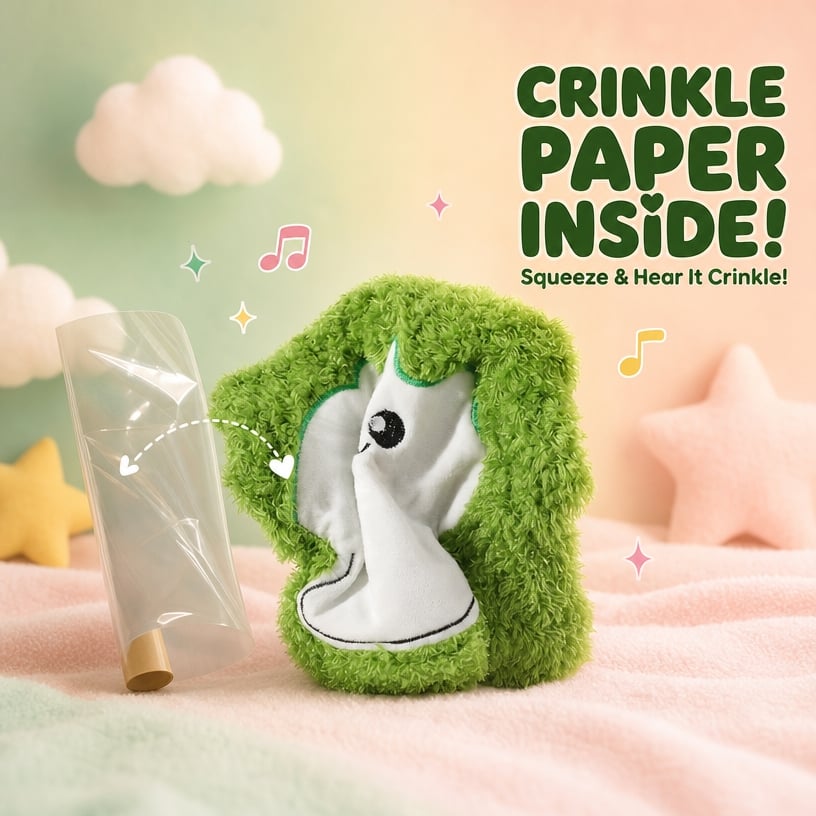
This is the design concept behind the crinkle plush toy.
However, this kind of change does not necessarily require a complete redesign of the plush toy.
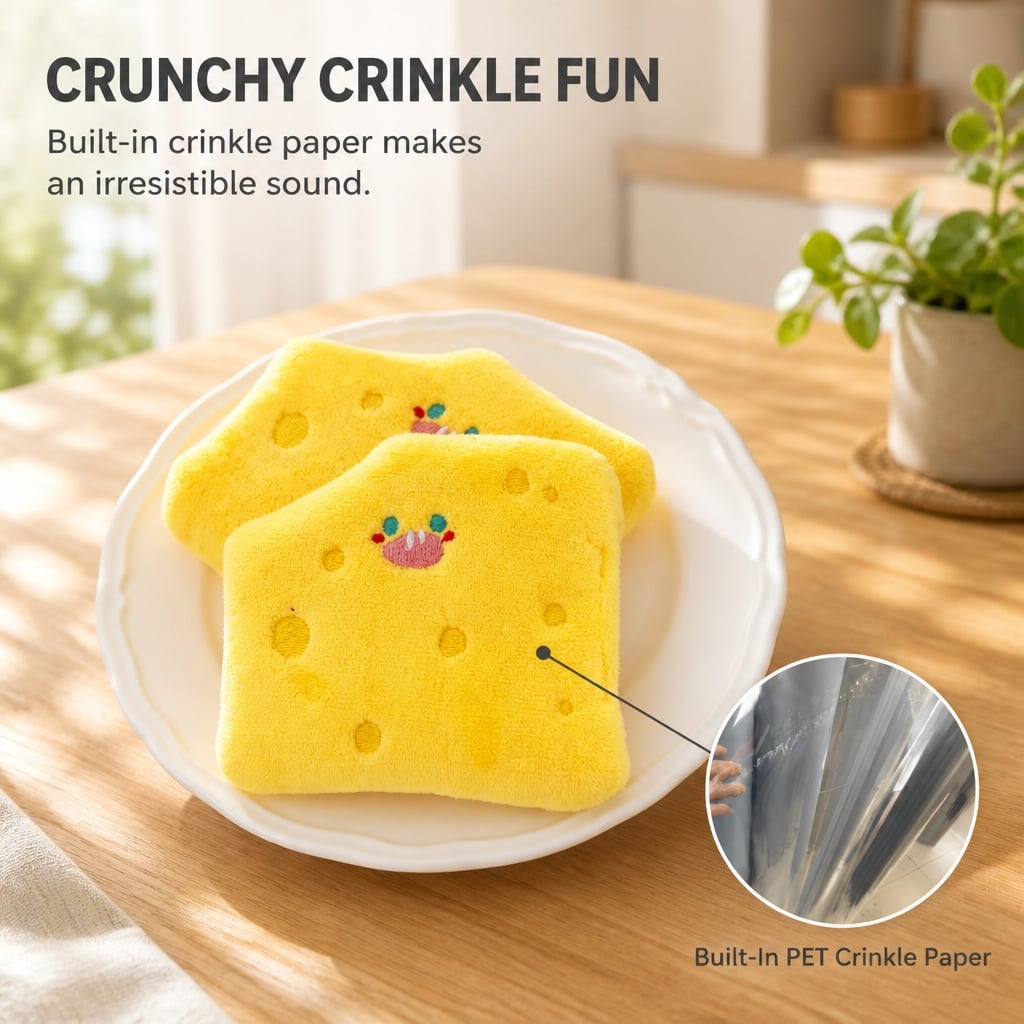
By incorporating crinkle paper into specific areas, manufacturers can add new auditory and tactile experiences to the product while largely maintaining its original appearance and shape.
This is particularly valuable for custom plush toys.
What Is Crinkle Paper in Plush Toys?
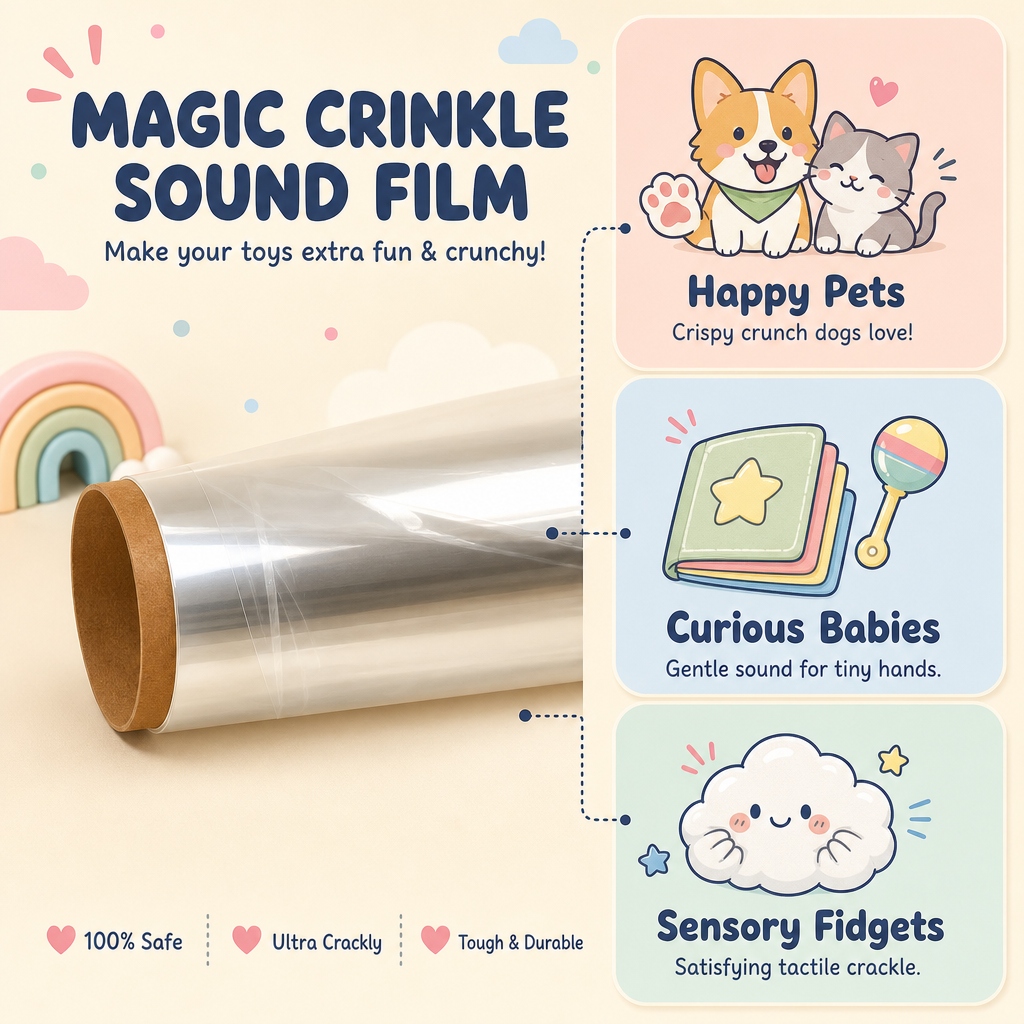
Crinkle paper is an internal material that produces a rustling sound when squeezed, crumpled, or moved.
When placed inside a plush toy:
Touch → Squeeze → Crinkle Sound → Sensory Feedback
Why Does Sound Matter in Plush Toy Design?
1. Visual → Tactile → Auditory
Traditional plush toys:
Visual + Tactile
With the addition of crinkle paper:
Visual + Tactile + Auditory
In other words, a single product can stimulate multiple senses simultaneously.
2. Enhanced Interaction
Standard plush toys:
Pick it up → Hold it
With crinkle paper:
Pick it up → Squeeze it → Hear the sound → Squeeze again
Consumers are more likely to explore proactively:
"Where does the sound come from?"
"What happens if I squeeze it again?"
Thus, crinkle paper is not merely a material; it introduces a simple interactive mechanism.
Where Can Crinkle Paper Be Added to a Plush Toy?
① Ears
Suitable for small plush toys and animal-themed plushies.
Produces sound when the consumer squeezes the ears.
② Paws
Enhances interactivity.
Especially suitable for:
Animal plush toys
Pet toys
Cartoon characters
③ Belly
An ideal location for incorporating crinkle paper.
Produces sound when the consumer hugs or squeezes the body.
④ Tail
Suitable for animal-themed plush toys.
The tail is a part of the toy that is naturally easy to touch and pull.
⑤ Localized Areas
This demonstrates your factory's design capabilities.
Crinkle paper does not need to be included throughout the entire plush toy.
Placement can be determined based on:
Toy size
Shape/Form
Target age group
Design effect
Cost requirements
Plush toys are gradually evolving from purely "visual products" into offerings that provide a richer sensory experience. This does not mean that every plush toy requires complex features.
Quite the opposite.
Sometimes, a simple crinkle-paper element is enough to transform the way consumers interact with the product.